Wearables in the Ring: How Data Is Changing Combat Sports
By Muay Thai coach, GymJoin co-founder
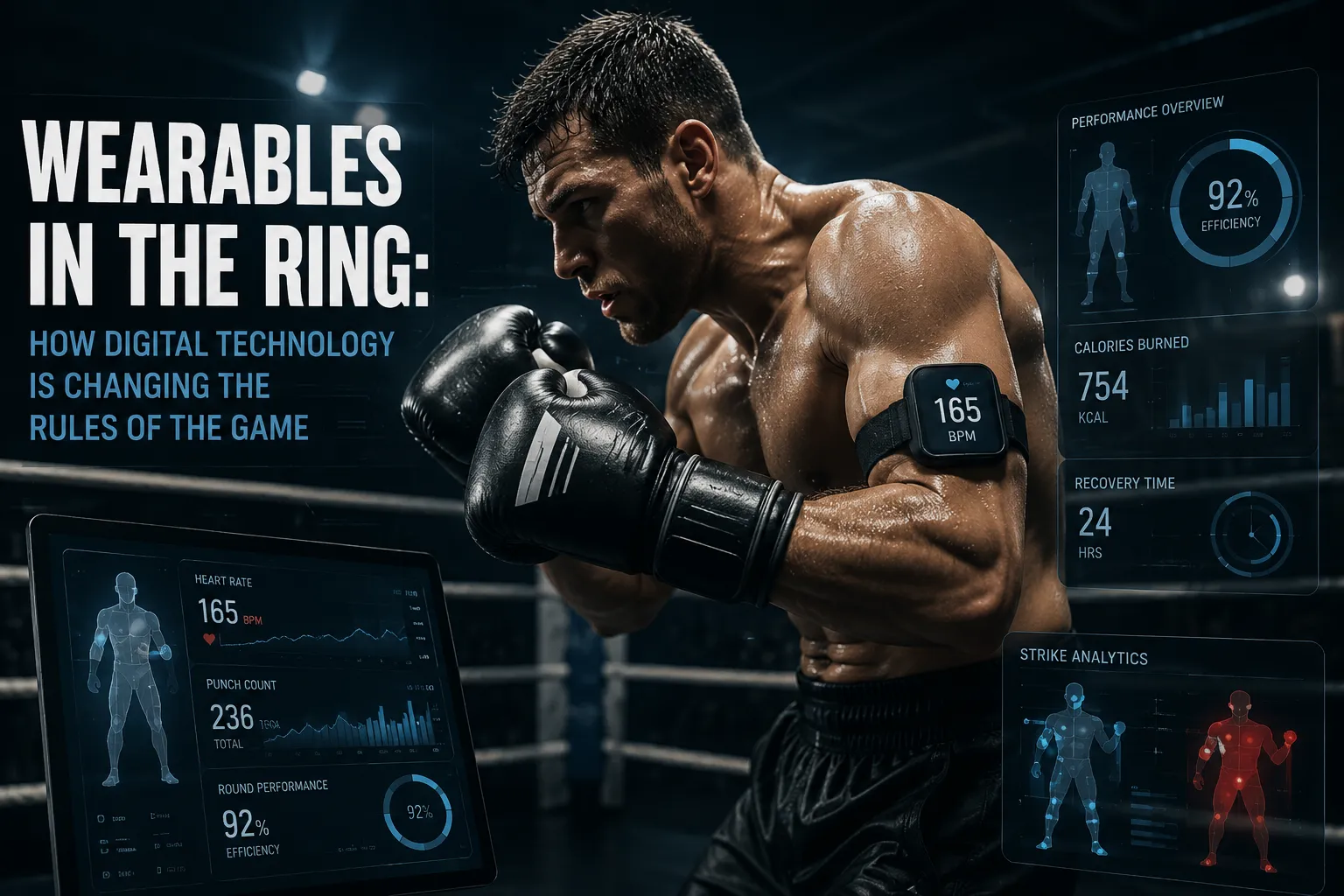
The modern ring no longer belongs to intuition alone. In 2026, behind every explosive strike, behind every defensive move, there is a precise mathematical calculation. Wearable technology — from chest heart-rate straps to sensors tucked inside boxing hand wraps — has become the main engine driving the evolution of combat sports.
What Is It Used For in Combat Sports?
Classic fitness watches are of little use during sparring or clinch work — a strike to the wrist can injure a training partner or shatter the screen itself. That’s why the ring relies on specialized devices instead: chest straps, bicep bands, and sensors embedded directly into hand wraps.
These devices capture two types of data:
- Physiological metrics: heart rate variability (HRV), real-time heart rate zones, heart rate recovery speed between rounds, and sleep/recovery quality.
- Kinetic metrics: the number of strikes thrown, their speed (kilometers per hour or meters per second), impact force, and even the type of strike (jab, hook, uppercut).
How the Coach Uses the Data
For a coach, wearables are the athlete’s “onboard computer” — a tool that supports decisions based on numbers, not just the visual state of the fighter.
- Load management: if a fighter’s morning HRV reading drops sharply, the coach knows the central nervous system (CNS) is overloaded. Instead of hard sparring, the athlete gets technical work or a recovery session.
- Round-by-round intensity control: the coach can see whether the fighter is working in the anaerobic zone, at the edge of exhaustion, and adjust the pace of pad work or sparring accordingly.
- Peaking for competition: by analyzing the “strain” accumulated over weeks, the coach knows exactly when to start the taper — reducing training load before a fight — so the athlete steps into the ring fresh and explosive.
How the Athlete Uses the Data
For a fighter, wearable data is a tool for self-monitoring and a powerful source of motivation.
- Ring IQ and workload analysis: hand-wrap sensors show exactly how many strikes were thrown per round and their average speed. The fighter can see whether their output drops off in round three or round five.
- Smarter recovery: the athlete sees a direct link between their routine — dinner, bedtime — and how ready their body is for the next day’s training.
- Discipline during solo work: when a fighter goes for a run or hits the heavy bag alone, a heart rate monitor keeps them from coasting — or, just as often, from redlining their heart rate into a zone that erodes endurance.
What Age Is Appropriate?
There are no medical or physiological age restrictions. From a practical standpoint, though:
- Under 10–12, complex sensors don’t add much value. Kids should be learning to love the sport, building coordination and game-like skills, without the pressure of numbers.
- From age 12–14, as young athletes move into youth and cadet-level competition with serious training loads, trackers become genuinely useful. They help coaches and parents make sure a young athlete isn’t overtraining and that their cardiovascular system develops in a healthy, gradual way.
Are Wearables Useful for People Who Just Train “for Themselves”?
Not only is it fine — it’s strongly recommended. For amateurs juggling Muay Thai with a job, a business, and daily life, wearables can matter even more than they do for pros.
- Protection against everyday stress: the body doesn’t distinguish between the stress of a hard clinch session and the stress of a rough workday or a bad night’s sleep. An HRV reading can flag it: “Today was a tough day at work, your heart hasn’t recovered — dial back the intensity in the gym.” That single insight can prevent chronic fatigue and cardiovascular strain.
- Optimal fat burning: if the goal of fitness boxing is weight loss, a heart rate monitor helps keep you in the so-called “fat-burning zone” (aerobic), making every session as effective as possible.
- A gamified element: watching your punch speed climb or your resting heart rate drop is a genuinely fun reason to stick with training and watch your progress show up in the numbers.