Training ·
Fitness Without Borders: The Full Guide to Online Training
By Muay Thai coach, GymJoin co-founder
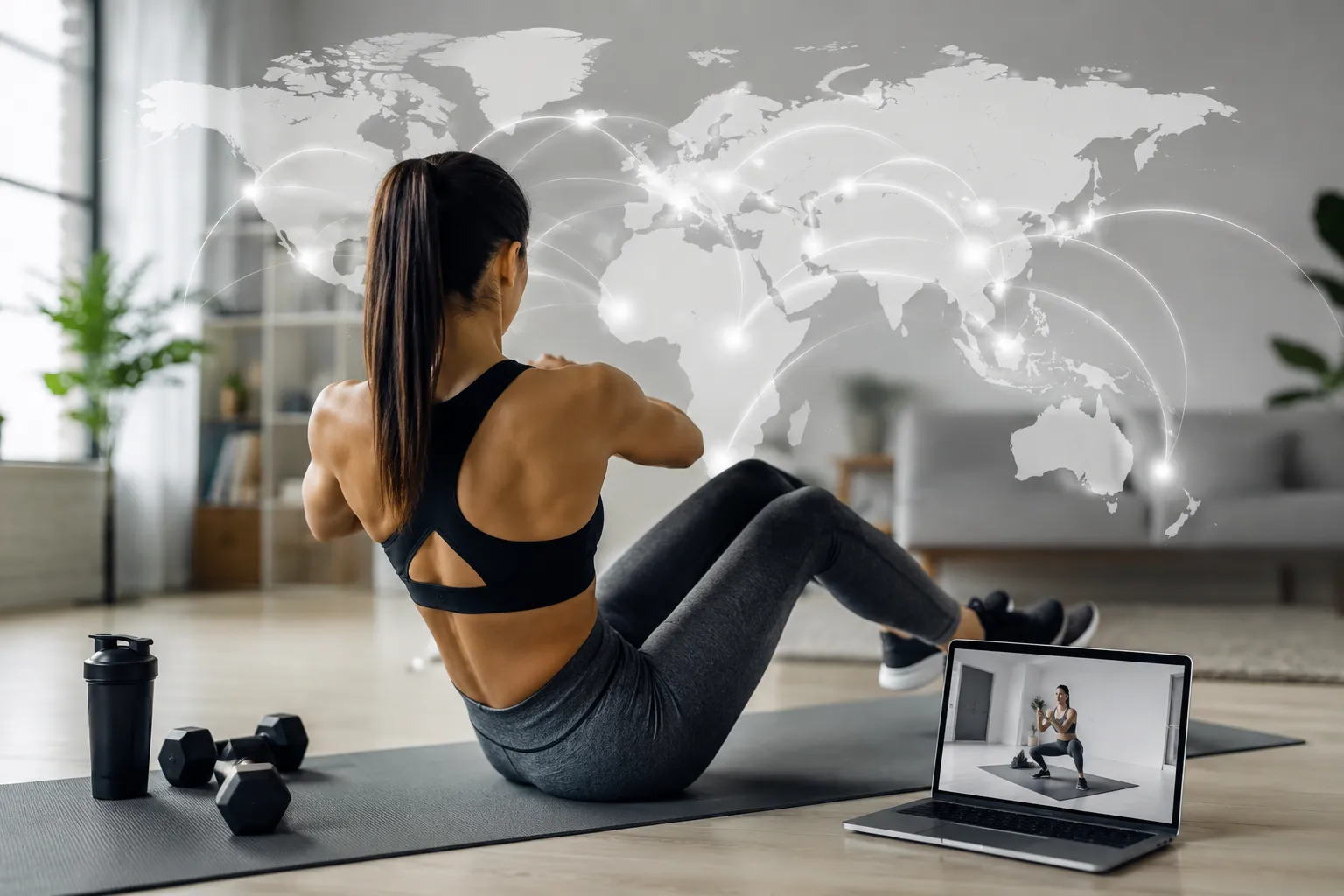
The fitness industry has changed fundamentally in recent years. If buying a membership at the nearest gym used to be the only standard path to good shape, today your gym can be an ordinary living room, a patch of park grass, or a hotel room.
Online training has grown from a temporary, forced workaround into a self-sustaining, multi-billion-dollar industry that keeps gaining ground. Let’s look at why this format became so in demand, which platforms are setting the trends, and what hidden risks are worth keeping in mind.
Why Has Online Training Become So Popular?
The main driver behind the explosive growth of online fitness is the changing pace of modern life. Time has become the most valuable resource, and the ability to handle work remotely naturally pulled body-care habits into the digital space along with it.
- Time savings: no need to spend 30–90 minutes commuting to and from the gym, packing a bag, or waiting in line for a machine.
- Lower psychological barrier: many people, especially beginners, feel self-conscious training among experienced athletes at the gym. A home setting feels safer and more comfortable.
- Cost savings: online subscriptions or pre-recorded courses are usually significantly cheaper than a classic gym membership or in-person personal training.
Key Advantages of the Online Format
Online training has given amateur athletes a freedom that used to be nothing more than a dream.
1. Flexible Scheduling and Total Freedom
You’re no longer tied to a group class schedule or a gym’s opening hours. You can train at 6 a.m. before the rest of the household wakes up, or at 10 p.m. after work. If you only have 15–20 free minutes, you can easily find a short routine that fits.
2. Access From Anywhere in the World
The only requirement for a full workout is a smartphone, tablet, or laptop and a stable internet connection. You can keep up your training routine:
- while traveling for business or on vacation;
- during a move or while living in a different city or country;
- while spending the weekend at a cabin or simply working out in the park.
3. Access to World-Class Coaches
In the past, training under a leading yoga instructor from India, a star CrossFit coach from the US, or a world boxing champion meant living in a major city and paying enormous fees. Today, thanks to Zoom, specialized platforms, and online challenges, you can train under the guidance of the world’s best experts right from your own room.
Popular Online Training Platforms
Depending on your goals and preferred format, a handful of global and regional leaders stand out.
- Nike Training Club (NTC): one of the best free apps in the world. Offers hundreds of video workouts — strength, HIIT, yoga, stretching — with detailed demonstrations from professional Nike athletes.
- Apple Fitness+: a service tightly integrated with the Apple Watch ecosystem. Lets you cast workouts from top instructors to your TV or tablet with real-time heart-rate tracking.
- Les Mills+: a platform from the creators of iconic fitness programs like BodyPump and BodyCombat. A great pick for fans of high-intensity group fitness with professional choreography and music.
- Peloton App: grants access not only to classes on Peloton’s own bikes, but also to a massive library of strength, functional, running, and meditation workouts.
- Zoom / Google Meet / Telegram: tools for real-time one-on-one sessions with a personal coach, who watches you through the camera and corrects your form as you go.
Downsides and Hidden Drawbacks of Online Training
Despite its many advantages, the online format has real limitations worth taking seriously.
1. Weaker Control Over Exercise Technique
This is the biggest and most dangerous downside. When you’re training from a pre-recorded video, the program can’t see you. Even in a live Zoom session, a coach’s view is limited to a flat, two-dimensional phone screen.
An incorrect knee angle during squats, a rounded back during a deadlift, or flawed striking mechanics can all lead to micro-injuries and chronic joint or spine problems.
2. No Direct, In-Person Contact
A coach’s physical presence creates a particular energy and discipline. An in-person mentor can spot you on heavy lifts, physically correct your hand position in boxing, sense your emotional state, and either encourage you or stop you at the right moment.
3. Limited Equipment at Home
It’s harder to have a full range of equipment at home. A yoga mat is enough for yoga or Pilates, but serious progressive strength training requires dumbbells of various weights, kettlebells, barbells, or specialized machines — all of which take up space and cost money.
4. Demands on Self-Discipline
At home, there’s always a temptation to get distracted — by chores, messenger notifications, or pets. Starting a workout from your couch is far harder than when you’ve already changed clothes and walked into a gym.
Conclusion
Online training is a powerful, accessible, and flexible tool that has made sport part of daily life for millions of people. It’s a great fit for maintaining general fitness, building endurance, losing weight, and staying active while traveling.
For beginners, or for anyone working with heavy weights and complex technique, though, the best solution is still a hybrid approach: build the fundamentals in person with a coach at the gym, then transition to convenient online formats.