Strength That Protects: Martial Arts Against School Bullying
By Muay Thai coach, GymJoin co-founder
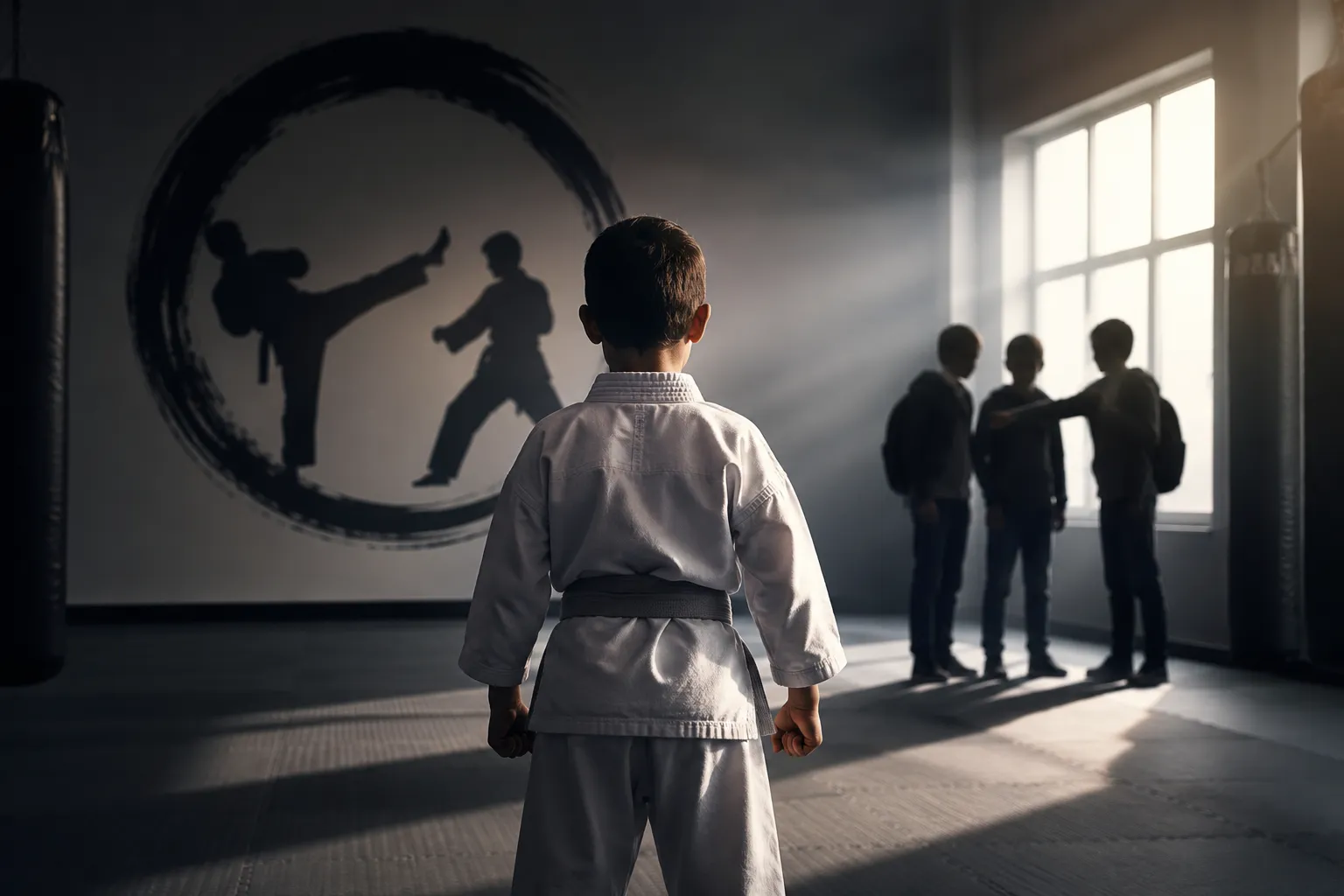
School bullying is a serious problem that, sadly, thousands of children face every day. Psychological pressure, mockery, and sometimes even physical aggression from peers can leave deep emotional scars for life.
Many parents look for a way to protect their children, and one of the most effective tools in this fight is martial arts. They work not as a weapon of attack, but as a reliable shield that builds a child’s inner core.
How Martial Arts Protect Against Bullying
There is a common misconception that martial arts teach children to resolve conflicts with their fists. In reality, it is exactly the opposite. The first thing taught in training is self-control and conflict avoidance.
A Change in Body Language
Aggressors (bullies) usually pick their victims by outward signs: an insecure walk, downcast eyes, slumped shoulders. A child who practices martial arts holds their posture, makes eye contact, and radiates confidence. Bullies subconsciously sense this strength and simply don’t dare to pick on them.
Psychological Readiness
When a child knows they can defend themselves, their fear disappears. The absence of fear in the victim’s eyes breaks the aggressor’s entire script.
The Ability to Say “No”
Training builds voice and character. A child learns to push back verbally — clearly, calmly, and confidently — stopping a conflict while it is still taking shape.
The Impact on Physical Condition: Building a Strong Body
Regular training fundamentally changes a child’s physical development, making them stronger and more resilient.
Coordination and Agility
Martial arts develop a sense of balance, control over one’s own body, and reaction speed. The child becomes composed and agile.
Physical Strength and Endurance
The core muscles grow stronger, and the cardiovascular system improves. Physical fitness becomes an additional source of self-confidence.
Posture and Tone
A straight back and a fit body are not only about health — they are also that same visual marker of a self-assured person nobody wants to pick on at school.
The Impact on Emotional Well-Being: Inner Calm and Discipline
The biggest transformation from martial arts training happens on the inside. Physical exercise is a powerful tool for building a healthy mind.
Growing Self-Esteem
Every challenge overcome in training, every new technique learned, every sparring session proves to the child: “I can. I am capable of more.” This lays a solid foundation for healthy self-esteem.
Emotional Self-Regulation
On the mat, children learn to control their anger, fear, and resentment. They release all the stress accumulated during the day in the gym, leaving aggression and anxiety behind its doors.
Respect and Discipline
The philosophy of martial arts is built on respect for the coach, the opponent, and oneself. A child who respects themselves will never let others humiliate them — and will never become a bully either.
Why I, as a Muay Thai Coach, Recommend Martial Arts
I see hundreds of children come to the gym in all kinds of states: shy, withdrawn, sometimes intimidated by problems at school. And I watch how, after just a few months of training, they turn into strong, self-confident individuals.
As a Muay Thai coach, I recommend this path for several reasons.
Muay Thai is an honest and demanding discipline that teaches you about reality. There are no illusions here. A child learns to take a hit — both literally and figuratively. They discover that falling down is not the end, but simply a reason to get back up and become stronger.
Muay Thai gives a child a complete arsenal of self-defense skills, but the most important thing it offers is inner calm. A true fighter has nothing to prove to anyone in the school hallways. Their strength is visible without a single punch.
Martial arts training is the best investment parents can make in their child’s safety, health, and character. We don’t teach kids to fight — we teach them to be strong, to protect the weak, and to walk through life with confidence.